Featured Collection
Dr. Rudolph C. Rÿser Writings
A one-of-a-kind collection of more than fifty years of written work produced by the groundbreaking Indigenous author and CWIS founder.
View Featured CollectionAbout the Archive
Founded as a documents repository in 1979 in response to a resolution of the Conference of Tribal Governments, today, this library is among the largest indigenous peoples libraries in the world, containing more than 100,000 full text documents, reports, and publications from American Indian nations and indigenous nations from around the globe. More than 10,000 documents have been digitized and we are in the process of digitizing the rest and uploading them to this open source digital repository. As this project grows, it will continue to remain grounded in its original purpose: to serve as a living resource where Indigenous knowledge—in all its forms—is preserved, shared, understood within its context, and carried forward for future generations.
Center for Traditional Medicine
Infusing the healing arts and sciences with
cultural wisdom since 1977.
For over 40 years, we have focused on the practical application of traditional medicine (and integrative medicine) in global public health. We provide clinical care, consult on program design and development, and conduct research using Indigenous sciences and methods with a feminist lens.
Learn MoreFourth World Journal
The Fourth World Journal (FWJ) is the world’s leading publication for ideas and analysis about and by writers from the world’s more than six thousand Fourth World nations.
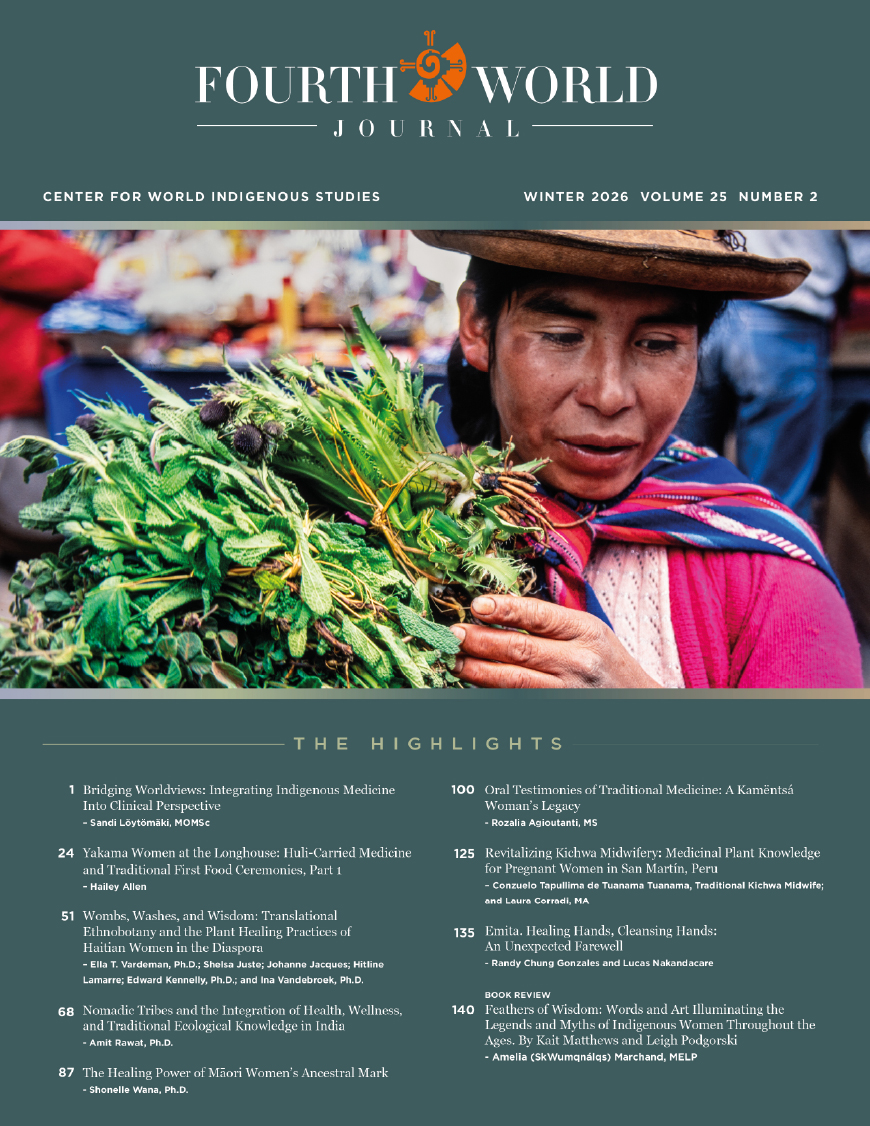
Volume 25, Number 2 (2026): Fourth World Journal
This special issue of The Fourth World Journal is devoted to women’s traditional medicine as a vital source of knowledge, practice, and resistance. Bringing together healers, activists, scholars, and artists from across global Indigenous and diasporic contexts, this issue’s focus challenges dominant frameworks of health by foregrounding cultural, relational, and place-based experiences of health and healing. We read academic analysis, narrative, and creative expression, presented by a wide range of voices, practices, and geographies, that illustrate how women sustain and adapt healing traditions.